
Beyond the Mist
- Genre: Deckbuilder Legacy PvE/PvP
- Type: Proof-of-concept Prototype
- Software: Tabletop Simulator
- Duration: 8 Weeks
- Iterations # 7
- Playtests # 6
Role: Game designer
(Research and concept, documentation, prototype, balance)
Iterations Overview
Goal
- Risky Co-op I liked the idea of players banding together without knowing if it was the right call. Like in the Binding of Isaac card game, are you actually helping eachother, or is everyone just doing this for their own gain?
- Deckbuilding I liked the idea of making your deck be around the theme of what you do in-game. I loved the elegance of Slay the Spire so it inspired me.
- Mystery The theme of a foggy, mysterious land filled with magic intrigues me. Like an episode of X-Files set in a world where magic exists.
Overview & Technique Highlights
Game Premise: You and your companions are inhabitants of an island surrounded by a magical fog. Lately, the fog has been acting erraticaly, summoning monsters and causing disasters on the island. It’s up to you and a few others to try and find out what is happening on the island, and how to fix it.
Build your Action deck by resolvign encounters and gaining rewards over time in a solo or co op game. Backstab your friends, help the whole group out, or make a secret alliance with only a few of them to win the game.
Technique Highlight 1
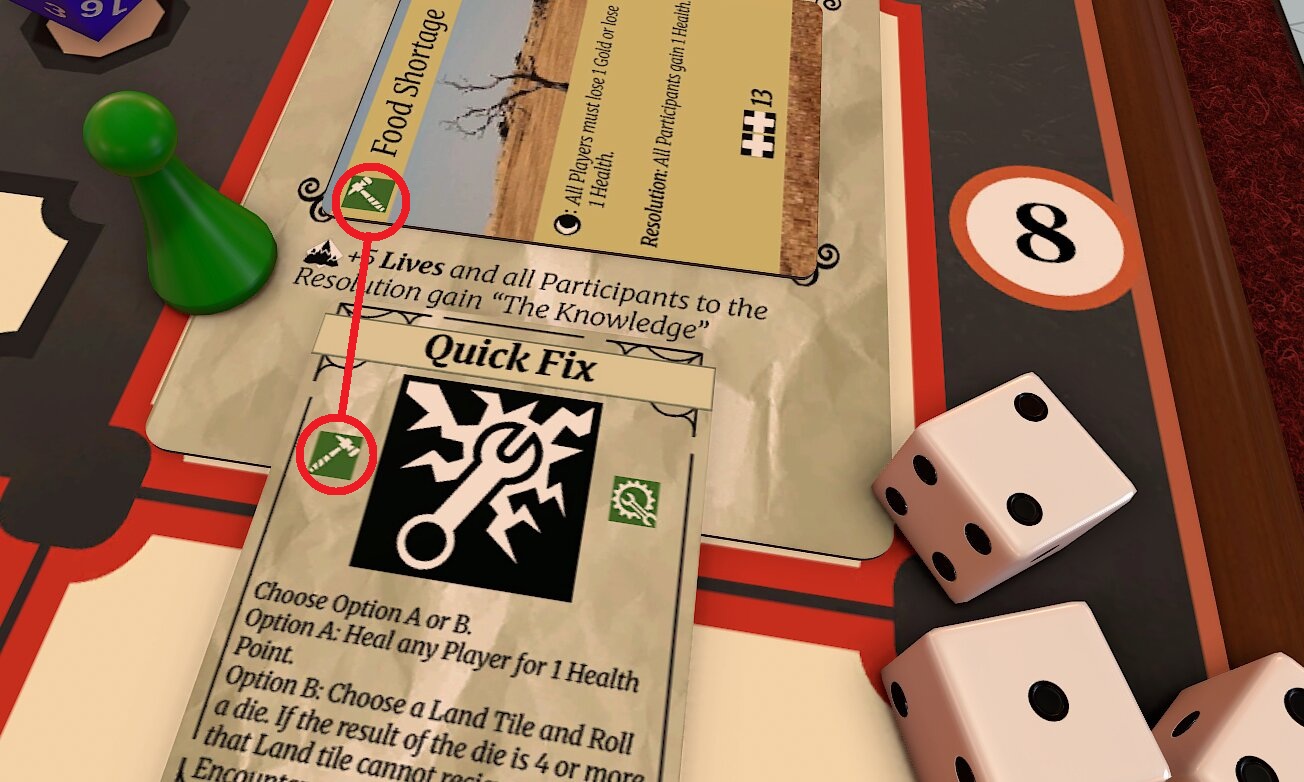
- Created 4 Types and a total of 12 Subtypes, giving each Action and Encounter card 1 Type and 1 Subtype. Bonuses are given to the player that uses an Action card with a corresponding Sub/Type on an Encounter. Each Type and Subtype is represented by a symbol.
- Every Type is given a main mechanic, such as PvE Focus (the majority of encounter cards share this type), Control abilities (see player cards, learn hidden information) Soft PVP abilities (Stop action cards from other players, steal resources) and Support abilities (heal, gain more resources, make the gamestate easier for all players)
- Few Special Action cards were given more than one Type and big values as rare-to-obtain advantages to create high stake moments.
Technique Highlight 2
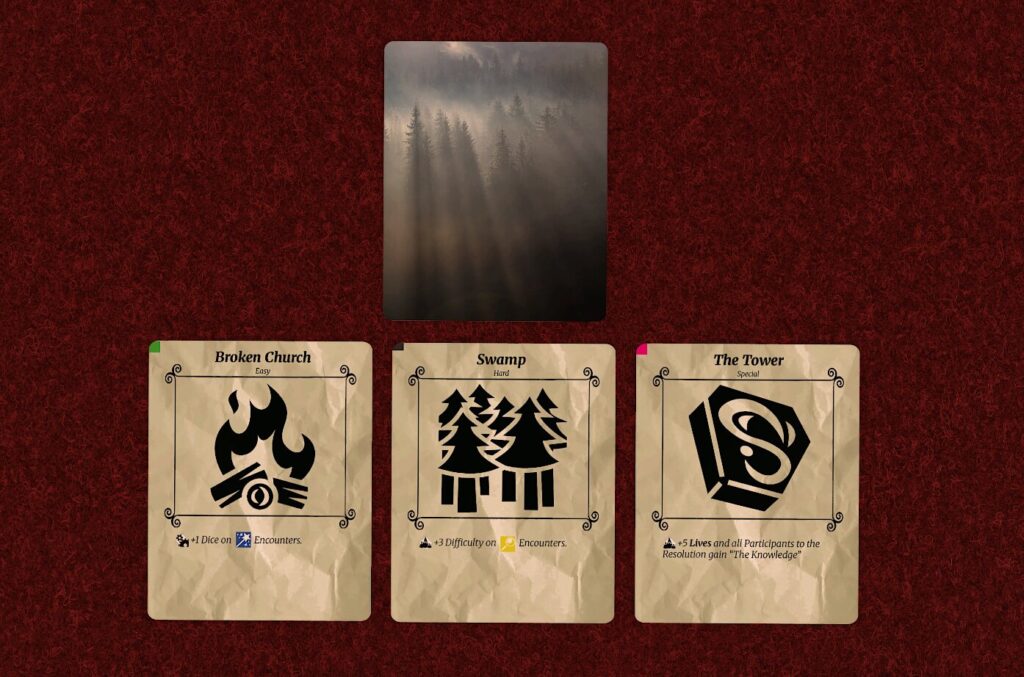
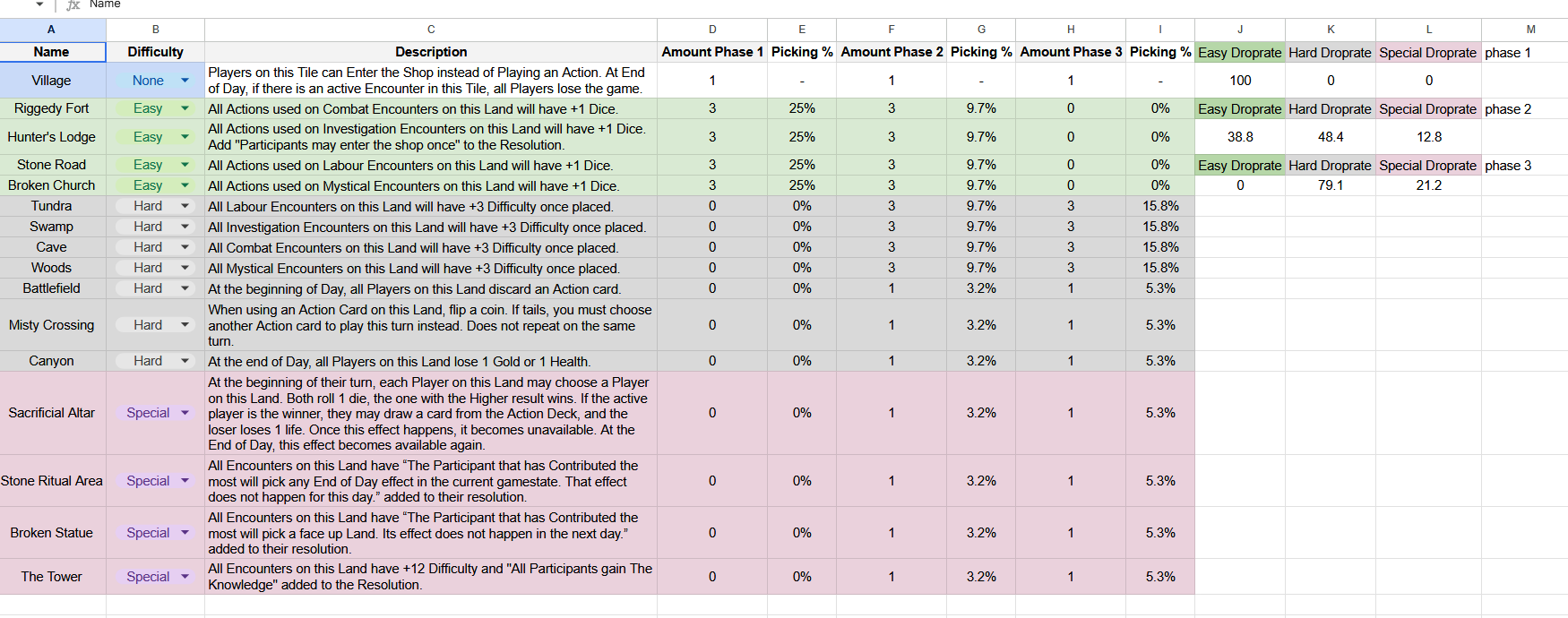
- Added 17 Land Cards that give an extra effect to the Encounter that is placed on it
- Classified Lands with a Difficulty level, adding higher difficulty cards in the midgame and removing lower difficulty cards in the lategame, creating a difficulty curve
Technique Highlight 3
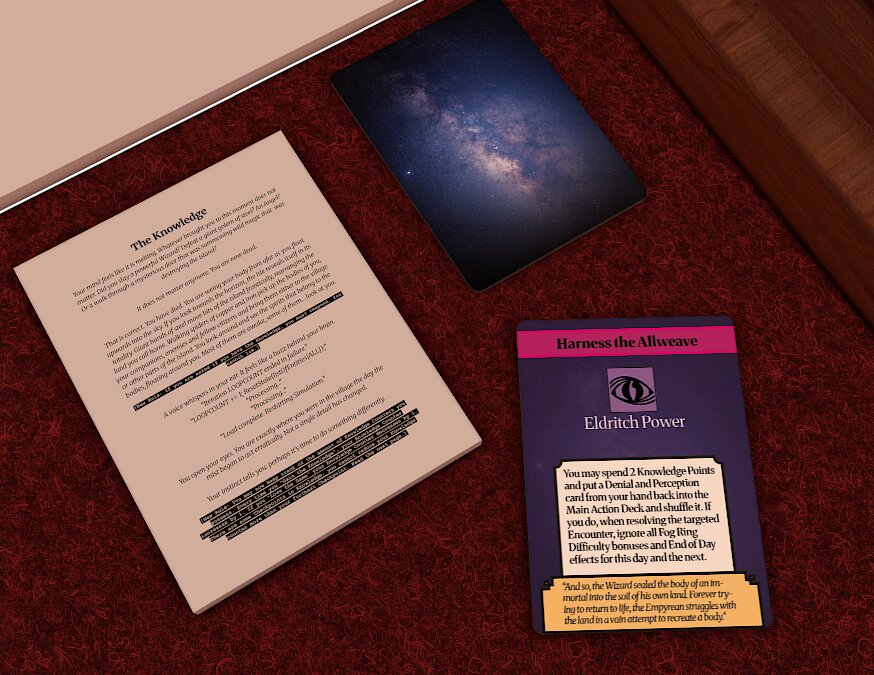
- Added a Secret Ruleset that is unlocked upon playing more than one match to completion.
- The Secret Rules give additional objectives to returning players and reason to involve players that have never played or have played less
- Through the unlocking of Knowledge Points returning players have additional powers that can be used to further cooperate or contrast eachother, depending on your goal.
- Playing enough games unlocks the True Ending of the game, with a secret Endgame Encounter.
Process Breakdown
1. Research, Ideation & Planning
- Analyzing Games: The concept of opposing/hidden objectives from Werewolf and the coins and encounter system from The Binding of Isaac board game were useful.
- Ideating Mechanics: Everything in the game had to be done through rolling dice to ensure winning players might be overcome by luck.
- Resonant Theming: Fog hiding parts of the island create resonance with encounters gradually appearing, and helps with the feeling of mystery I want to evoke.
2. Prototyping
Paper Prototype
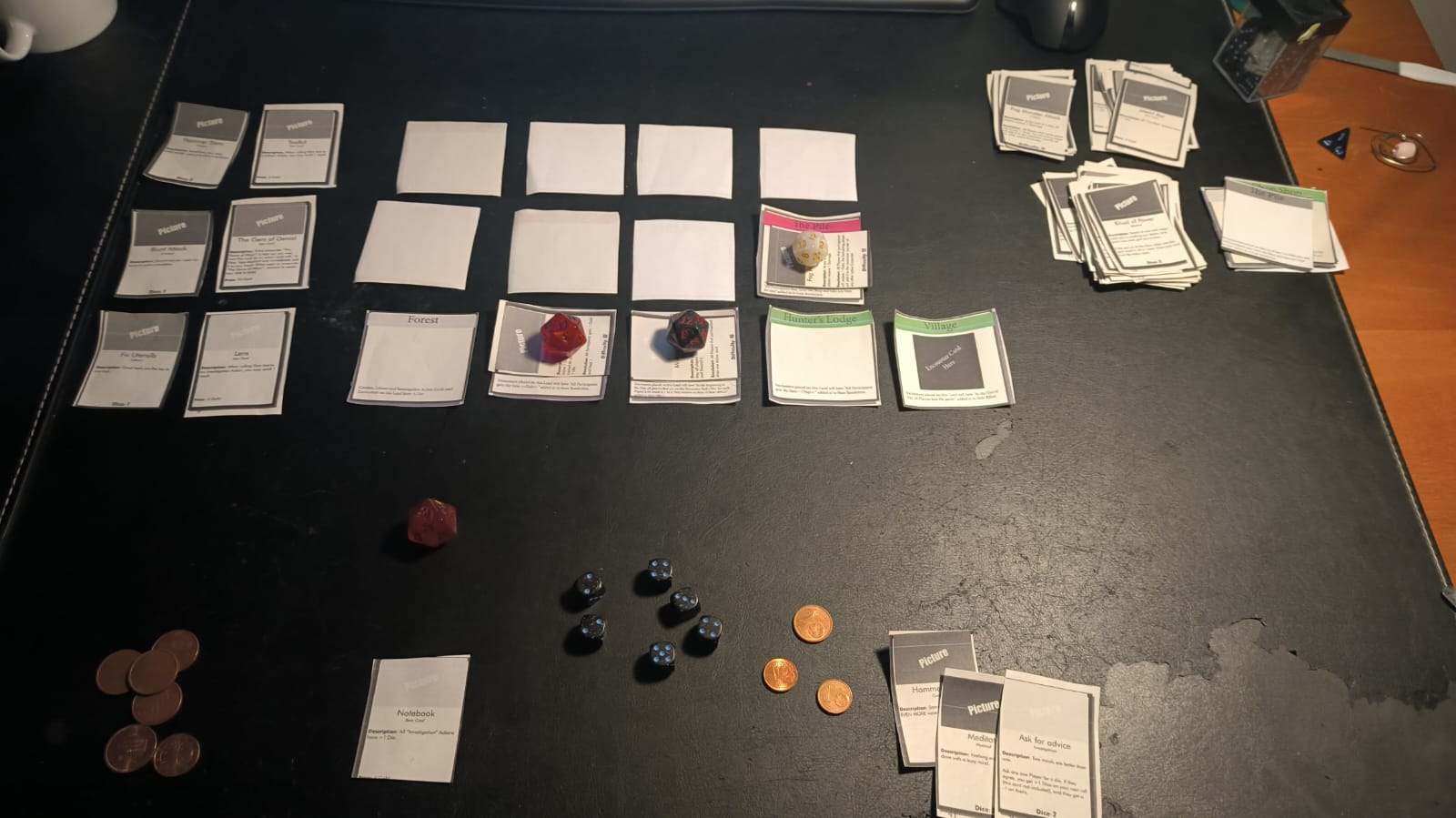
- Printed out all cards and encounters using placeholder art and smaller, modular values
- Used color coded cards for visual clarity and showing synergies.
- Gave thematic names to card types for more meaningful build options.
Rapid Prototype
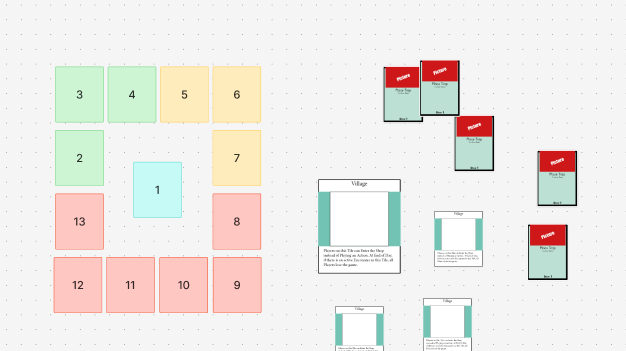
Miro
Result: A functioning Player, Shop and Land Board that conveyed information to the players.
Goal: Experimented with the use of Boards to convey information and rule reminders.
3. The First Interactable
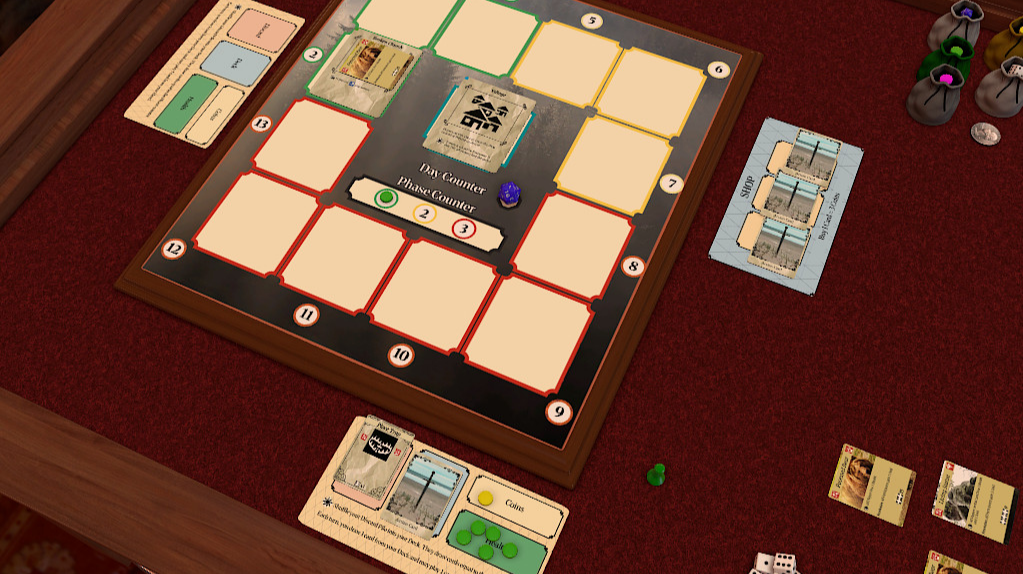
- Mechanic Synergy 1: Deckbuilding with 4 different card types, each card type has a different role between Player control, PvE, PvP and Support capabilities.
- Mechanic Synergy 2: I studied games like 7th Continent and Tainted Grail to make a Land Tile system where encounters would recieve random modifiers to them based on where they’re found
- Narrative Synergy: I looked towards Avalon myth and legend in order to better depict the mysterious powers in the environment
4: Playtest & Key Iterations
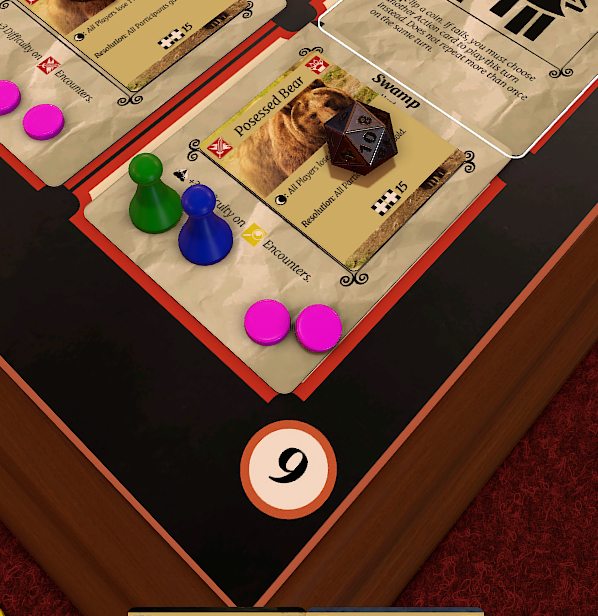
Playtest #1 Highlight
Playtest #2 Highlight
5. Polished Portfolio Piece
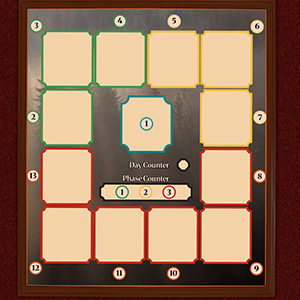
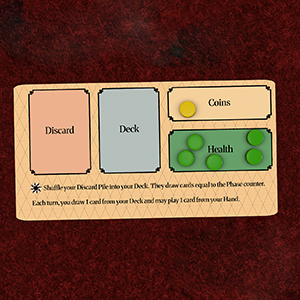
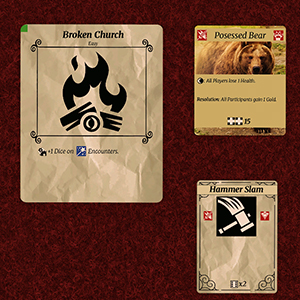
- Easy to learn, hard to master game with high replayability due to the interactions between Actions, Encounters and lands.
- Intrigue and mystery with the novelty of revealing hidden mechanics of the game to new players, alongside a long term goal for the game with the Secret Manual.
- Clarity and simplicity of information thanks to Player boards, Land Board, Shop board and use of symbols on cards.